
Puppy Feeding Guide: How Much, What, and How Often to Feed
You just adopted a puppy and aren't sure how much to feed it. Here's the practical guide: portions, number of meals per day, which food to choose, and common mistakes to avoid.
Shop them today
Products in this article
A puppy grows faster in its first year than in the rest of its life, and all that development depends on what you feed it. Feeding it well at this stage shapes its health for good. This is the practical guide every first-time owner needs.
1. Use a Puppy-Specific Food
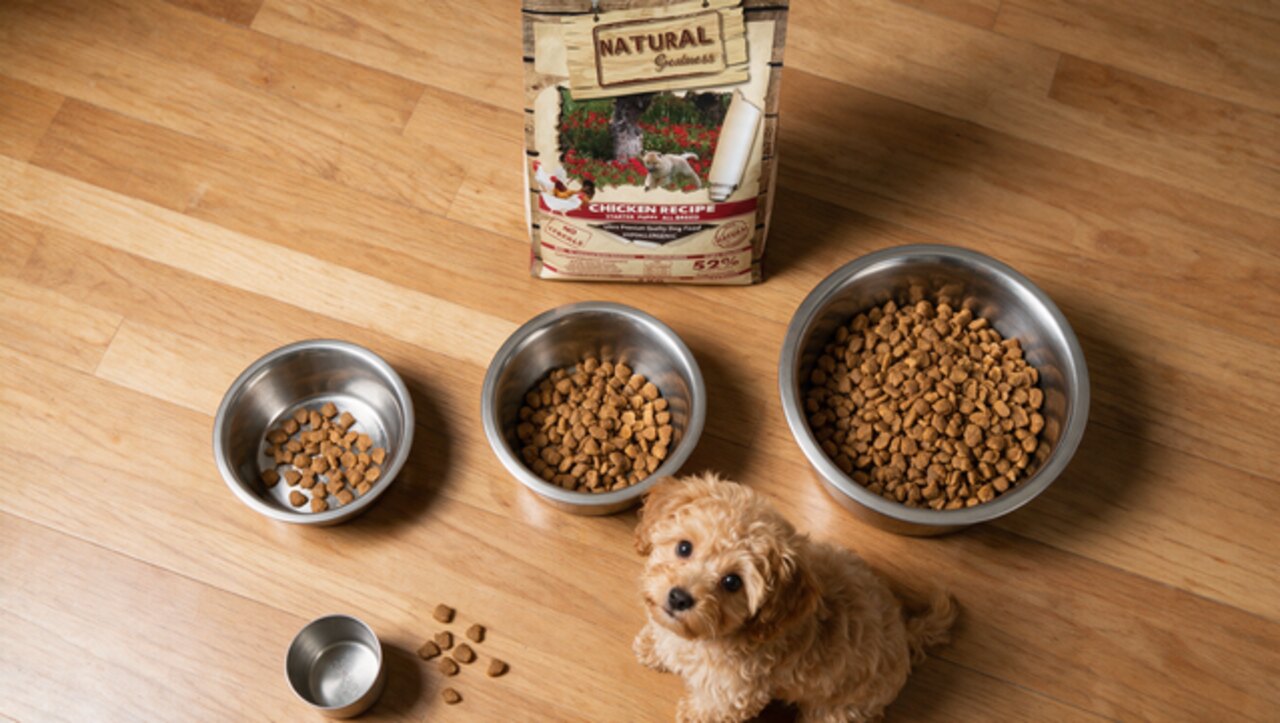
This is the one point that isn't negotiable. Adult food doesn't have the protein, calories, or calcium and phosphorus balance a puppy needs to build bones and muscle. Use a puppy formula from weaning onward, such as Natural Greatness Chicken Starter Puppy, a natural recipe with real protein designed for a strong start. It comes in 2 kg, 6 kg, and 15 kg bags, depending on your dog's size.
2. How Many Meals a Day
A puppy's stomach is small, so it's better to split its portion into several meals rather than giving it all at once.
- 2 to 3 months: 4 meals a day.
- 3 to 6 months: 3 meals a day.
- 6 to 12 months: 2 meals a day.
- From one year on: usually 2 meals a day, now on adult food.
If the kibble is hard for it to eat at first, you can moisten it a little with warm water or mix it with a portion of wet puppy food.
3. How Much to Feed
The exact amount depends on the puppy's current weight, its expected adult weight, and the brand of food. The feeding chart on the bag is your best guide: every bag includes a portion chart by weight and age. Start there and adjust while watching your puppy:
- If its ribs are easy to see and it always seems hungry, it may need a little more.
- If it gets chubby and you can't feel its ribs, cut back a little.
Weigh it every week or two: it should gain weight steadily, not in jumps.
4. Treats Are Fine, but Keep Them Natural and in Moderation
Treats help with training, but they shouldn't exceed 10% of the day's calories. Choose single-ingredient natural snacks, such as Natural Farm freeze-dried chicken morsels or their collagen sticks, instead of treats loaded with sugar and dyes.
5. Always Keep Water Available
Fresh, clean water at all times, especially if it eats dry food. In Panama's climate this matters even more.
6. Common Mistakes to Avoid
- Feeding it human food: many of our foods are harmful to dogs (chocolate, onion, grapes, cooked bones). Avoid them.
- Switching brands all at once: it causes diarrhea. Make the switch over 7 days.
- Adding calcium on your own: a good puppy food already has the right balance. Adding calcium without a recommendation can do harm, especially in large breeds.
7. When Should You Switch to Adult Food?
In small and medium breeds, around 12 months. In large breeds, between 18 and 24 months. Make the change gradually to a natural adult formula, such as Natural Greatness Salmon.
Summary
Natural puppy-specific food, several meals a day that decrease with age, the feeding chart on the bag as your guide, and natural treats in moderation. We carry the best puppy brands in stock and deliver them the same day in Panama City. If you have any doubts about your puppy's growth, your vet is your best ally.
Frequently asked questions
How many times a day should a puppy eat?+
Between 2 and 3 months, 4 meals a day; from 3 to 6 months, 3 meals; from 6 to 12 months, 2 meals. From one year on, usually 2 meals a day with adult food.
What is the best food for a puppy?+
A puppy-specific formula that is natural and has real protein, such as Natural Greatness Chicken Starter Puppy. Choose the bag size based on your dog's weight.
Can a puppy eat adult dog food?+
It's not ideal. Adult food doesn't provide the protein, calories, or mineral balance a puppy needs to grow. Always use a puppy-specific formula.
What treats can I give my puppy?+
Single-ingredient natural snacks, such as freeze-dried morsels or collagen sticks, without going over 10% of the day's calories. Avoid treats with sugar and dyes.
Which human foods are dangerous for a puppy?+
Chocolate, onion, garlic, grapes and raisins, avocado, xylitol, and cooked bones, among others. When in doubt, don't feed it human food.
Black Dog Panama
Content reviewed by the Black Dog veterinary team. We are a Panamanian chain with 20 pet stores, vet clinics, grooming and pharmacy. We write from what we see every day caring for thousands of families and their pets.